
Residential geothermal systems positioned to save energy for new construction projects
Dandelion Energy CEO says OBBBA provisions open new pathways to make geothermal more accessible and affordable.
The One Big Beautiful Bill Act (OBBBA) is widely perceived as a setback for renewable energy, particularly in combination with executive orders from the Trump administration placing additional restrictions on solar and wind. While solar developers are looking to increasing demand to sustain future projects while rushing to beat pending construction deadlines, other renewable energy companies are finding some good news in the margins.
Dan Yates, CEO of Virginia-based geothermal provider Dandelion Energy, told pv magazine USA that H.R.1, as the OBBBA is officially known, has opened new pathways to make geothermal energy more accessible and affordable.
“First, H.R 1 maintained the 30-50% federal Commercial Investment Tax Credit (ITC) for geothermal heat pumps through 2034, and also introduced the option for geothermal leasing under the commercial ITC for residential customers,” Yates said. “This new provision enables third-party ownership models, where a company finances and owns the geothermal system and charges homeowners over time for the service.”
Dandelion Energy designs and installs residential geothermal heating and cooling solutions for single-family and multifamily new construction projects. The company’s geothermal system uses vertical ground loops, with pipes drilled 200–500 feet down into the Earth. Crews install the loops with well-boring equipment and trench them back into the house to connect to a ground-source heat pump. The high-density polyethylene pipes circulate a water and a propylene glycol mixture that absorbs the ground’s temperature.
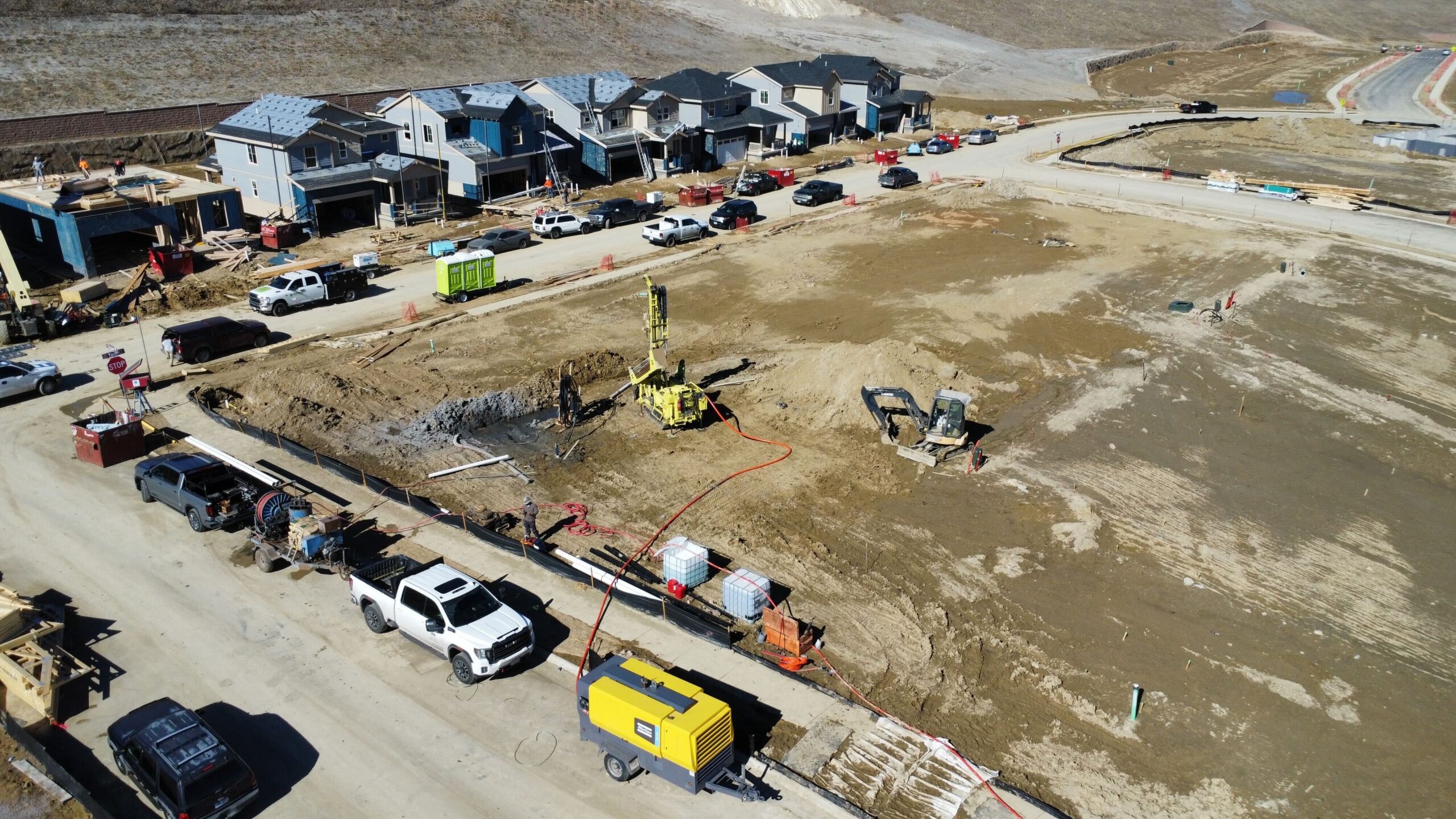
At this scale, the geothermal technology functions as part of a heating, ventilation and cooling (HVAC) system. During the heating cycle, the circulating fluid in the ground loop absorbs the ground’s relative warmth and carries it into the home’s heat pump. The heat pump exchanges its heat energy with liquid refrigerant inside the pump, which is compressed to a higher temperature and the resulting warmer air is distributed throughout the building.
For cooling, the heat pump reverses flow, pulling excess heat from the indoor air, transferring it to the circulating fluid, and sending the now-hot fluid down into the ground loop, where the heat is dispersed into the relatively cooler ground before circulating the now-cool air back into the house.
“The actual climate control is managed by the heat pump, which simply moves heat rather than generating it through combustion,” Yates said.
Unlike other forms of geothermal energy, Dandelion’s technology is using the heat differential at a relatively shallow depth. By contrast, Texas-based Sage Geosystems is using drilling technology from the oil and gas industry to develop energy storage and generation systems at the utility scale by digging many hundreds even thousands of feet down, where ambient temperatures can run turbines to generate electricity. Still different technologies use natural geothermal formations in volcanically active regions, which are relatively rare. Most of the approximately 16 GW of electricity generated from geothermal around the world are produced using the latter method.
If HVAC is perhaps a less ambitious use of geothermal energy, it is more widely applicable and thus may have a wider impact on reducing power consumption from polluting sources. According to Yates, powered by electricity and using the Earth’s consistent temperature, geothermal heating and cooling is an efficient, cost-effective and durable solution.
“There are certain climates, like areas with cold winters and hot summers, that see the largest benefits with significantly decreased energy bills compared to other traditional systems,” he said. “The third-party ownership provisions in H.R 1 coupled with state and local tax incentives make it a good time for home builders across the U.S. to deploy of residential geothermal.”
